

Consumers today have limitless choices. They will scroll past anything that doesn’t immediately resonate, and brands have to be more than average to stand out. Cultural Relevance has become an increasingly important currency for brand success. I think, however, that there is sometimes confusion around what “cultural relevance” really means, so I want to start there.
Defining Cultural Relevance
At its core, cultural relevance refers to a brand’s ability to meaningfully connect with and participate in the conversations, trends, values, and experiences that matter to its target audience. It’s about being in tune with the zeitgeist—understanding what people care about, how they communicate, what symbols and references resonate with them, and what social contexts shape their lives.
It expands beyond the products that brands sell, or even the partners they collaborate with, it’s the value that a brand brings back to consumers’ personal lives, their sense of self and their social circles.
The Social Identity Perspective
I like looking at cultural relevance through a certain perspective: imagine your brand as an individual seeking to join a social group. Just as a person would adopt certain behaviours, language, values, and aesthetic choices to fit in with their desired social circle, a brand must do the same to achieve cultural relevance.
This social identity approach means:
- Your brand is aspiring to become part of that community
- Your brand must demonstrate understanding of social norms and codes
- Your brand needs to reflect the persona and image of the community it wishes to join
- Authentic contribution to the group is essential for acceptance
- Your brand must evolve alongside the community as cultural dynamics shift
Whether we like to admit it or not, humans judge people by the company they keep, and consumers judge brands by their cultural associations and affiliations. A brand that successfully navigates this social dynamic becomes not just a product or service provider, but a cultural participant that reflects and reinforces consumers’ own social identities.
For example, the most culturally relevant brands for me right now range from the huge household names to the small challenger brands:
- Biotiful – focuses on a specific thing I care about, my immunity health and my gut health as well as a high protein “treat” with their new yoghurt range. Their social content and their product marketing is highly focused and aimed to support consumers that care about these things
- SpaceGoods – an alternative to my morning coffee, with a brand positioning focused on wellbeing and high performance. This comes across through all of their messaging and people that feature in their content. They also know that women are most likely to buy their products, so they are represented consistently throughout their social feeds & product look and feel
- Nike – it’s a classic, and despite recent challenges, it’s long-term legacy and contribution to a high performing culture of professionals and athletes will continue to be relevant in culture. It will keep their brand as one of the best brands in the world and relevant to people like me
A culturally relevant brand doesn’t observe culture from the outside—it participates in it, contributes to it, and sometimes even helps shape it in ways that feel authentic and valuable to consumers. It becomes part of the social fabric that people use to construct and express their identities.
Why Cultural Relevance Is Non-Negotiable
It’s undeniable that cultural relevance is important; it’s been important for many years, but increasingly it has become a critical business driver and should be an important factor in any good brand strategy. According to research from Kantar, brands with high cultural relevance grow nearly six times faster than those with low relevance. This impact extends throughout the entire marketing funnel, influencing everything from awareness to purchase intent.
When brands are culturally relevant, they become part of consumers’ identities and communities. As Dr. Marcus Collins, author of “For the Culture” explains, “For marketers that want to be relevant, the best opportunity is to start with your point of view on the world, and then engage with the world based on that point of view. The hope is that the people who see the world the way you do will use your brand to communicate their own identity.”
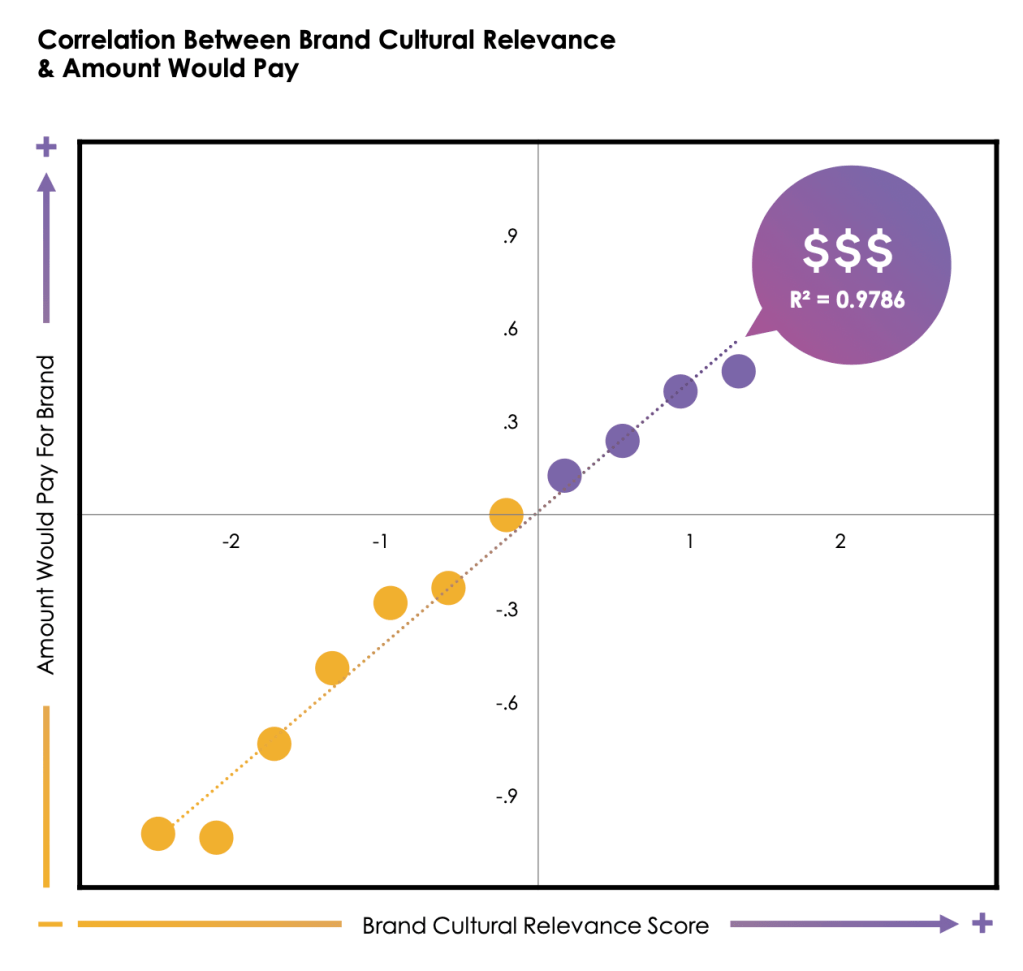
The impact is tangible: consumers are willing to pay more for brands they perceive as culturally relevant, with research showing a direct correlation between cultural relevance scores and the amount consumers are willing to pay.
Source: Magna x Media Trials x X
The Dimensions Of Cultural and Personal Relevance
Before building a strategy, it’s important to understand the dual dimensions of relevance:
Cultural relevance is “the extent to which something is appropriate or fitting to the conventions and expectations that demarcate who we are and what people like us do.” This relates to how brands connect with communities and broader cultural movements.
Personal relevance is “the extent to which something is appropriate to one’s identity—as an individual, accounting for all the intersections of their cultures, experiences, beliefs, and values.” This is about how brands resonate with individual consumers on a personal level.
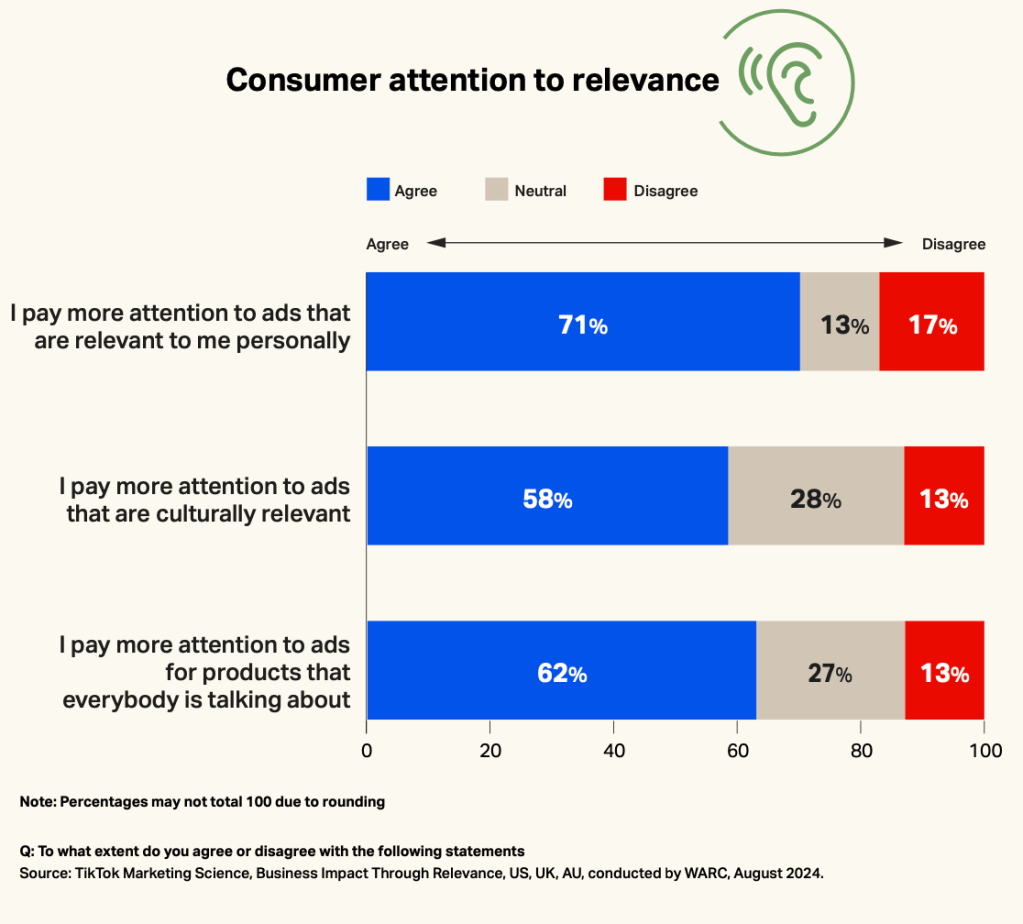
Both dimensions matter, and both make a brand relevant in culture. Research shows 71% of consumers are more likely to pay attention when content is personally relevant, and 58% when it’s culturally relevant.
Source: WARC 2024 x TikTok Unlocking business Impact Through Personal and Cultural Relevance
A Framework for Building Cultural Relevance
Here’s a practical framework, where I’ve expanded on WARC’s x TikTok’s latest research on cultural relevance. I hope this provides you with some actionable steps and considerations if you’re looking to expand your own brand relevance.
1. Be Current: Monitor and Engage with Cultural Trends Selectively
Brands should keep a pulse on what’s happening in culture, but be selective about which conversations to join. Nearly all consumers (94%) think it’s important for ads to reflect popular culture, but brands should avoid jumping on every trending topic.
Action steps:
- Establish a regular cultural monitoring process
- These could be weekly stand-ups to discuss social trends, competitor work and cultural news; there are also free tools that you can use with platforms like TikTok to understand what type of content is trending
- Identify trends that align with your brand values and positioning
- Create agile content creation processes for timely responses
- Focus on larger, sustainable creative ideas rather than fleeting viral moments
- Don’t just push product – particularly on socials!
- Find ways that you can provide genuine value, education, support and inspiration back to your community, particularly in engaged environments like social
2. Be Open: Research Communities to Identify Needs
Successful brands go far beyond demographic targeting to develop a deep understanding of the communities they want to reach. This involves active listening and engagement rather than making assumptions.
Action steps:
- Map the communities relevant to your brand
- Conduct psychographic and ethnographic research to understand community needs
- Identify where your brand can authentically add value
- Use social listening to identify conversation patterns and unmet needs
3. Be Human: Use Personality and Humour to Deepen Connections
In research, 55% of consumers said content feels personally relevant when it uses “humour that I find funny.” Showcasing brand personality was also identified as a top driver of brand relevance (40%).

Source: WARC 2024 x TikTok Unlocking business Impact Through Personal and Cultural Relevance
Action steps:
- Define your brand’s unique personality and voice
- Develop content that showcases humour appropriate to your audience
- Test different creative approaches to find what resonates
- Partner with creators who embody your brand personality
4. Be Authentic: Partner with Creators for Credibility
Creators help brands stay on top of trends and create authentic content that resonates with specific communities. 50% of people think brands that showcase authentic lifestyles and experiences of “people like me” makes a brand more relevant.
Action steps:
- Identify creators who align with your brand values
- Give creators creative freedom to interpret your brand in their voice
- Use creators for quick-turn content to stay relevant
- Build long-term relationships rather than one-off sponsorships
5. Be Engaged: Create Opportunities for Two-Way Relationships
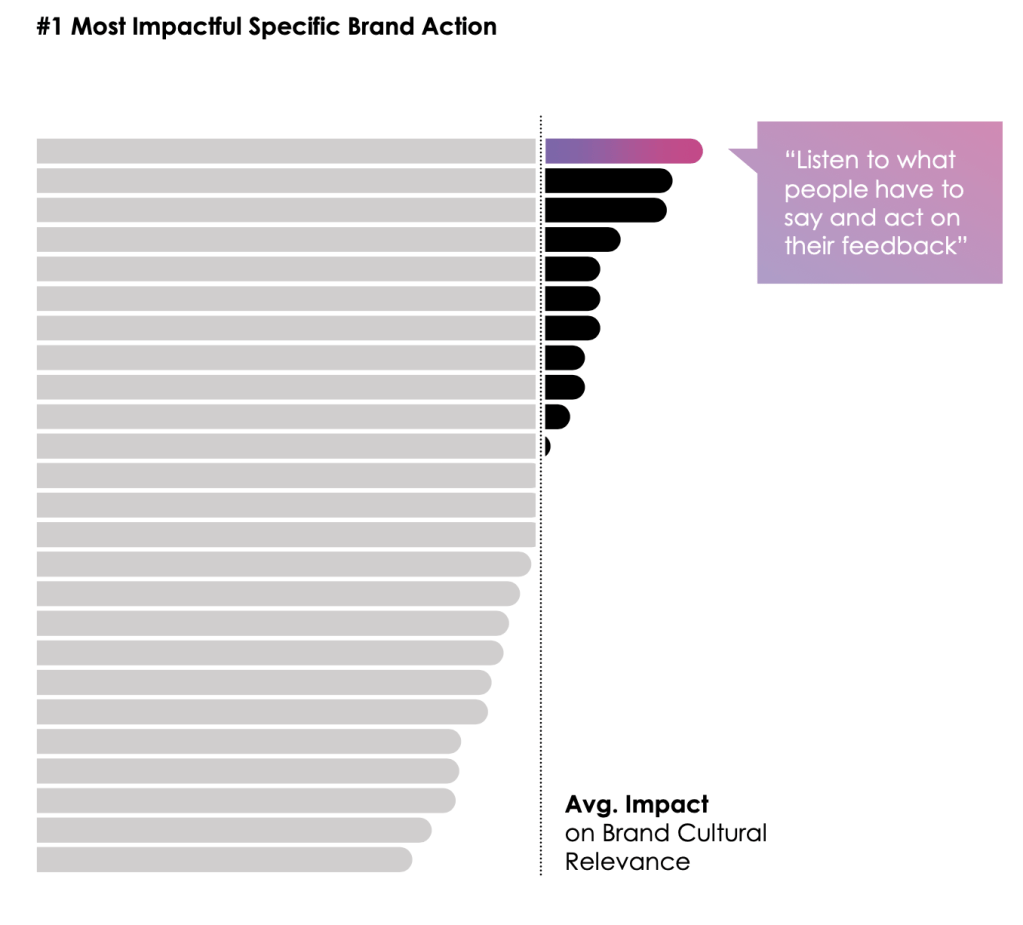
Listening and responding to consumer feedback was identified as the single most impactful brand action for building cultural relevance. Social media provides the ideal platform for this two-way engagement.
Source: Magna x Media Trials x X
Action steps:
- Develop processes for collecting and acting on consumer feedback
- Create content that encourages participation
- Respond to comments and engage in conversations
- Use social platforms strategically for relationship building
Measuring Your Progress
To track your brand’s cultural relevance journey, consider these metrics:
- Cultural relevance score (via brand tracking & social listening)
- Brand favourability metrics
- Social media engagement rate and sentiment
- Purchase intent metrics
- Price premium consumers are willing to pay
- Community growth and engagement
The Modern Brand Method
Building cultural relevance is a long-term commitment that should be woven into any modern brand’s strategy. This requires consistency, authenticity and commitment in cultural engagement, developing a narrative over time rather than making isolated statements.
As Alex Whitlock, Global Social Media Director at Burberry, puts it: “Committing to a platform like TikTok and embodying the platform fully – its behaviours, etc. – is a commitment to cultural relevance.”
The effort pays dividends. When brands build authentic connections with culture and communities, they create lasting relationships with consumers who see the brand as part of their identity and are willing to advocate for it beyond the transaction. The most exciting part is, modern digital media makes cultural relevance much more accessible and affordable for brands – particularly challenger brands with emerging budgets. Cultural relevance is a lever of growth, and prioritising it as a workstream and ongoing strategic initiative in your business will increase the effectiveness of marketing strategies over time.
 Welcome...
Leave a comment